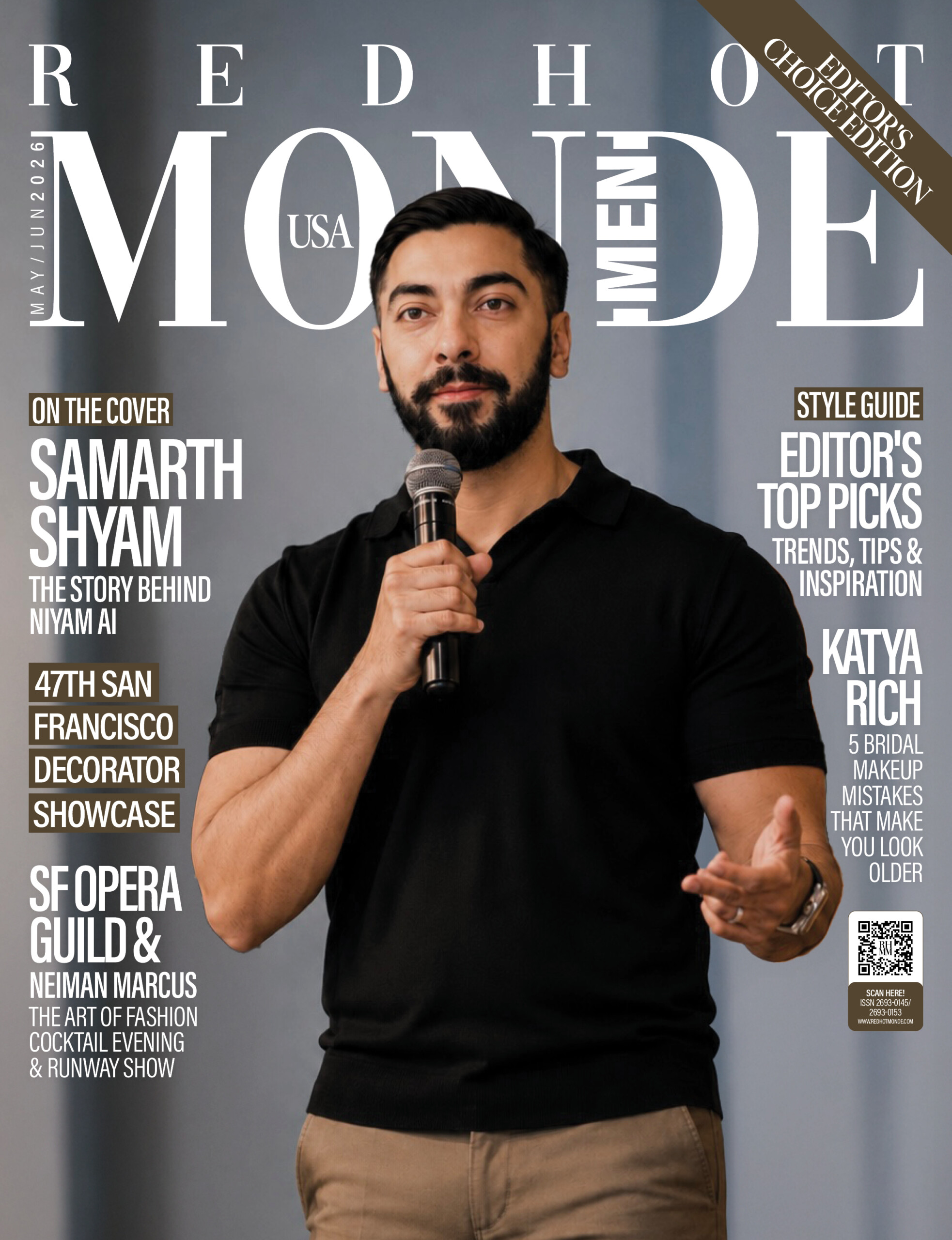
The Story Behind Niyam AI


Before the world knew you as the founder of Niyam AI, who was Samarth growing up, and what kind of environment shaped the person you are today?
Kuwait came first, and it was not exactly a normal childhood backdrop. I was there around the time the U.S. was moving in to remove Saddam Hussein from Iraq. My school was near military bases, so it was a wild time to be a kid. I remember week-long lockdowns, bomb safety drills, and red alerts. As a child, you do not understand the full politics of what is happening, but you understand the feeling in the room.
You know when adults are tense. You know when something bigger than you is happening. Then Dubai became home. It has this energy of wanting to be bigger, better, and globally competitive, and that definitely shaped me. I’m a third culture kid in a very real way. I’ve been an immigrant everywhere I’ve gone, and that mindset gets into you. I grew up between Kuwait and Dubai, then went to the US for university, and now I’m in Singapore. There’s this constant feeling that you have to be three or four times better, always proving you deserve to be there. So home was never really one place. It was always a mix.
For my family, Dubai was also where the hard years happened. My dad was an entrepreneur, soI grew up watching the full reality of that life. There were good stretches, and then there were stretches where everything felt like it was falling apart. I was in my teenage years, and I remember the feeling of it. Kids hear more than parents think they do. You may not understand a balance sheet, but you understand stress. You understand silence. You understand when your
parents are carrying something heavy.
At the same time, I was training seriously in golf. For a long time, that was my entire world. Golf gave me structure and discipline at an age where most of life felt outside my control. I spent most of my childhood learning how to lose quietly, reset, and hit the next shot. That sounds simple, but honestly, that is most of entrepreneurship too.
At 16, I led a village-level entrepreneurship initiative that won a $1 million grant prize through a Gates Foundation-linked CSR program. A big part of that money went toward supporting my family and helping my dad through debt. I was still a teenager, but life had already made me responsible for more than myself.
So when I look back, the environment that shaped me was a mix of things. Living between countries. Watching my dad build and struggle. Real financial pressure at home.
Golf. And being trusted with adult sized responsibility very early.
I do not think I became ambitious because I wanted applause. I became ambitious because I saw what instability felt like, and I never wanted to be helpless inside it.
Was technology always part of your story, or did your journey into AI happen unexpectedly? Technology was always around me, mostly because of my dad.
He was genuinely obsessed with it. He helped set up one of the earliest Oracle suites in the Middle East, so I grew up around computers, enterprise software, and the kind of systems most kids would probably find boring. To me, it just felt normal.
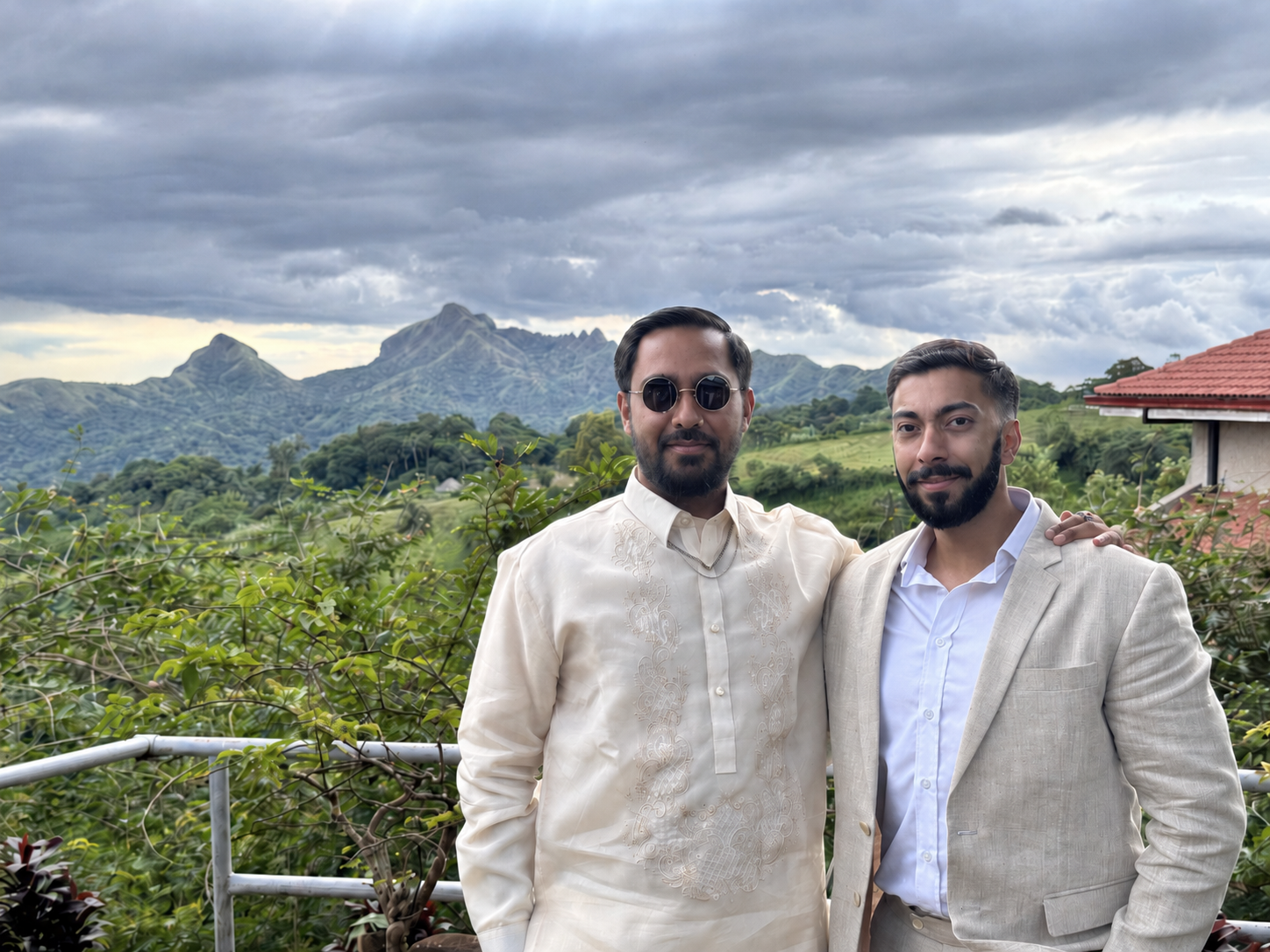
My dad worked with the Fouad Alghanim family in Kuwait as their head of technology. Their portfolio had everything in it: telcos, Nokia, electronics retailers, and their shareholding in Volkswagen. His job was essentially to lead the technology across all of it. I remember going with him to Wolfsburg when I was younger because of the Volkswagen connection. I did not understand the significance at the time, but looking back, it was wild exposure for a kid. I was watching how business, technology, industry, and family networks all connected before I had the language for any of it.
Tech was always present at home too. My dad had one of those Nokia phones with the small keyboard that looked like a tiny laptop. We had computers in the house early. He bought me an iPod classic, the 60GB one with video, and I remember how futuristic that felt. Things like that made technology feel close to me, not abstract.
Startups came a few years later. After the $1 million grant, I started getting exposed to people in Dubai who were building some of the first venture funds in the region. I got to watch some of that ecosystem being set up in real time. Some family friends were in that world, and they pulled me into the conversations. Some of the money I had left went into early-stage startups. I was angel investing before I even knew it had a name.
I was young and curious. I wanted to understand how companies were actually built, how venture worked, and why some ideas became huge while others did not.
My first company, VSMCOM, came out of that period. It started in the blockchain space and eventually became an enterprise loyalty and rewards infrastructure company. We built peer to peer reward redemption infrastructure and sold into large enterprise customers. The company scaled to eight figures in ARR and was eventually acquired.
That journey taught me how businesses really buy technology. Not based on buzzwords. Based on trust, implementation, operations, and whether you actually solve a painful problem.
AI came later, but in some ways it felt like the natural next chapter. I grew up around enterprise systems, started building in block-chain, learned enterprise through VSMCOM, and eventually found my way to AI through Niyam.
Looking back at your younger self, what experiences do you think influenced the way you lead and build today?
A lot of it comes back to golf and family.
Golf was my singular passion growing up. It is probably also responsible for how competitive I am. It taught me how to be alone with pressure, which is the simplest way to say it. When you are standing over a shot, nobody can help you. If you played badly on the last hole, nobody cares. You still have to hit the next shot. You still have to breathe, commit, and live with the outcome.
At 17, an NCAA scout was set to come watch me and a group of other kids from across the country play. Two weeks before that visit, I tore my ACL and MCL playing basketball. I was genuinely shaken. That injury changed everything overnight and stopped the path I had built my identity around for years.
That shaped me as much as golf itself did. I learned that the things you organize your life around can disappear without warning, and you still have to figure out what comes next. That lesson keeps showing up in founder life. You build something, you plan around it, and sometimes the plan dies. You still wake up the next day.
Golf also made me comfortable with direct feedback. Golf does not let you hide. Your score is your score. That is how I like to build too. I would rather know the truth quickly than sit in a comfortable lie.
Watching my dad gave me the other half. I saw what building actually costs. The good stretches and the rough ones. The bankruptcy. The pressure. The rebuilding. None of it was theoretical for me. I have known since I was young that ambition is not free.
That is probably why I lead the way I do now. I care about ambition, but I do not romanticize it. I know people depend on the decisions you make.
I know you can look confident from the outside and still be carrying a lot internally. With Niyam, I try to lead with honesty. I do not need everything to look perfect. I would rather we face reality, move fast, and keep going.
Keep going, but do not lie to yourself while doing it.
The startup world often celebrates success, but rarely the sacrifices behind it. What is something people misunderstand about your journey as a founder?
People mostly see the résumé version. Exited founder. AI founder. Raised funding. Working with large manufacturers. It sounds clean. It sounds like everything followed some master plan.
It did not.
A lot of my story has been much more personal than that. Growing up, I watched my family go through real financial difficulty. My dad’s entrepreneurship came with a lot of highs and a lot more lows. At 16, I made my first $1 million, and a big part of it went toward helping my family and getting my dad through debt. I had to do the same when VSMCOM got acquired. And you know what, I wouldn’t change it.
So when people talk about my “exit,” they do not always see what was sitting on the other side of it. I had people to take care of. I had family debt around me. I had real responsibility much earlier than most people probably realize.
And then you look around.
You see people your age taking cushy jobs, moving up quickly, getting paid extremely well, some heading toward seven figure compensation, while you are sitting there trying to figure out rent money. You are not paying yourself. You are carrying family pressure. You are trying to convince yourself that the thing you are building is still worth it.
That really makes you question yourself.
And on top of that, you deal with rejection constantly. Not once or twice. Hundreds of times. Honestly, thousands of times over a founder’s life. VCs say no. Customers say no. People ignore you. Warm intros go cold. Someone tells you they love what you are building and then disappears for six months. You get excited about a deal, and then procurement slows it down. You get excited about an investor, and then they pass with some polite sentence that tells you
nothing.
You can get rejected ten times before lunch and still have to show up in the afternoon like you believe. That is the part people do not understand.
Being a founder is not just about having conviction. It is about having conviction after being told no over and over again. It is about staying calm when the world keeps giving you reasons to stop. It is about waking up the next day and sending the next email, taking the next call, doing the next demo, fixing the next bug, even when your ego is completely bruised.
Then came Ezzayo. Agrim and I built that company together, and it did not work out the way we wanted. Our Singapore passes got cancelled. We had to leave and come back on tourist visas. We were not paying ourselves. There were stretches where I genuinely thought, “What are we even doing? Do we still have a company? Can we even stay here?”
That part was not glamorous at all. It was embarrassing. It was stressful. It was the kind of period where you do not post updates. You wake up, try to figure out the next move, and quietly hope you are not making a fool of yourself.
But that chapter is exactly why Niyam means so much to me.
Niyam was not born from comfort. It came after failure. It came after Agrim and I had been through the worst part together and still chose to keep building. We basically said, if we are going to do this again, it has to be real. It has to matter enough to be worth the suffering. I think people misunderstand sacrifice. They think it means working late or taking investor calls at weird hours. That is not the real thing.
The real sacrifice is carrying uncertainty for years. It is helping your family while trying to build your own life. It is watching other people choose safer paths and wondering if you made the wrong call. It is getting rejected constantly and still having to act like the next conversation could change everything. It is smiling through a win when you know exactly how much fear, debt, and pressure sat behind it. It is rebuilding after failure with no guarantee that the next thing will work either.
Being a founder is not for the weak. Honestly, it is addictive in a slightly unhealthy way. You have to want it badly enough to keep walking back into the fire. Maybe you have to be a little masochistic. But for some of us, building is the only thing that makes sense, even when it makes no sense on paper.
I am proud of the wins. But I am probably more shaped by the chapters where things were not working, where people kept saying no, and where I had to keep going anyway.
BUILDING NIYAM AI
Every company begins with a vision. What was the moment that inspired you to create Niyam AI?
The actual spark for Niyam was a conversation Agrim and I had with one of our really good friends, Julien, the co founder of Ryder. He was describing all the issues he was facing as a hardware founder: how Kickstarter is basically a graveyard of hardware startups, how expensive it is to build a physical product, and how many companies miss their launch windows entirely.
The more he talked, the more we realized this was a real space.
We felt like maybe this was something we could disrupt or optimize using AI. Agrim had been building production grade ML systems since 2018 for companies like Citi, Bloomberg, and Reuters. I had been selling to enterprises since I was 18. We felt like this was something we were actually built for.
We started by focusing on the totally wrong part of the value chain, honestly. Our first product was a schematic AI analyzer. Looking back, it was the wrong wedge, but it got us in the door. We got into Iterative with a $200,000 check, and that gave us room to keep going.
After that, we spoke to almost a thousand domain experts. We got massive
design partners on board. We built. We iterated. We failed. We rebuilt. We finally got to where we are now with Niyam, and we are still tweaking it. That part never really stops.
The founding moment was not one big insight. It was a conversation, a wrong first guess, a check, and then a lot of stubbornness.
AI has become one of the most competitive industries in the world right now. What makes Niyam stand apart beyond the technology itself?
The biggest difference is that we are building for physical atoms.
Most AI right now is being built for software companies. Fintech. Insurance. Marketing. All real industries, but the consequences of being slightly wrong are usually manageable. You can rerun a job, refund a customer, or ship a patch.
We are in hardware. Electronics manufacturing. Semiconductors. This is serious. When something is wrong here, it is in the physical world. It is a component on a board. A board in a product. A product in someone’s hands. Recalls can cost hundreds of millions. Compliance failures can shut down entire product lines. Bad sourcing decisions can ripple through years of operations.
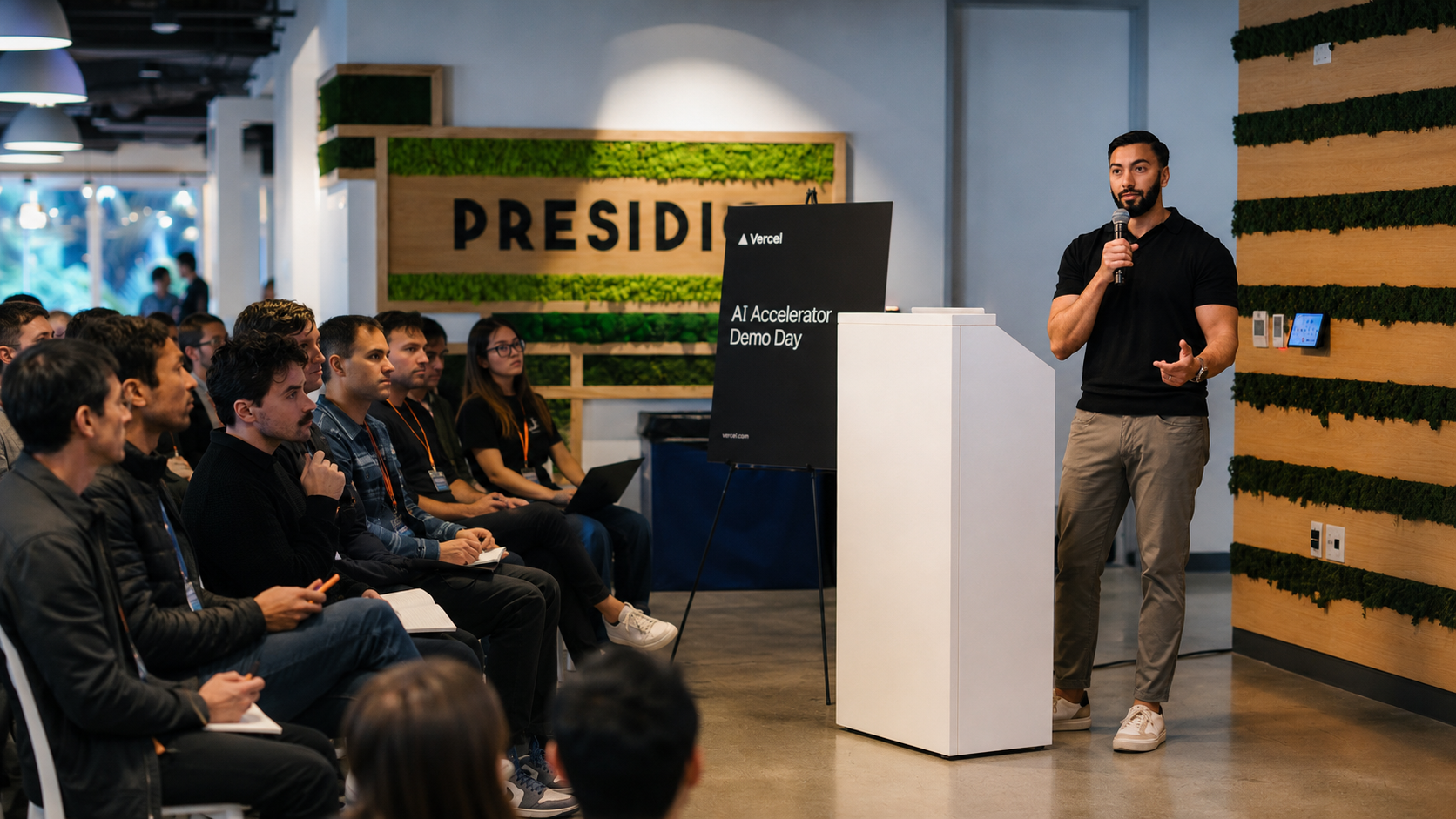
That is the bet we made. We picked a space where being right is not negotiable, where customers know exactly how expensive it is to be wrong, and where AI has not yet shown up properly because most of the field has been chasing easier problems.
We were also lucky to find customers early who treated us like partners, not vendors. Our first design partner is a Tier 1 ODM, one of the largest electronics manufacturers in the world. They helped us shape the product, and we are now also living with a major hardware OEM. You cannot fake that kind of feedback loop. It changes how the product gets built.
That is what makes Niyam different. We are not trying to make AI impressive in a demo. We are trying to make it trustworthy inside the systems that build the physical world.
What has been the most challenging part of building the company, both professionally and personally?
Professionally, the challenge is the bar.
Hardware manufacturing is not a space where you can be 98 percent right and call it good. That last 2 percent can become a real downstream problem. A production issue. A compliance issue. A sourcing issue. A recall. We are sitting at the boundary where component data enters production systems, and once it is in, everyone downstream trusts it. There is no room for us to be a little wrong. There is no “we will patch it next sprint.” If we let bad data through, real products in real homes pay for it.
The other side of the professional challenge is trust. We work inside very sensitive customer environments. Medical devices. Hardware products under serious confidentiality obligations. Manufacturing workflows that nobody outside the company has ever seen. You have to earn the right to even be in the room. And once you are in, you have to prove every day that you deserve to stay there. Every demo. Every meeting. Every detail. That kind of trust is slow to build and
fast to lose.
Then there is the rejection. Enterprise building is basically living inside rejection with occasional oxygen. VCs say no. Customers say no. Partners say no. People take calls, sound excited, and then disappear. A demo goes well, and then procurement slows everything down. Legal takes months. Security asks for another review. A champion leaves. Someone says the problem is real, but the timing is not right.
And still, you show up to the next call like the next yes could change everything. Because sometimes it can. One customer can change the company. One investor can change the runway. One design partner can change the product. One yes can make the last hundred no’s worth it.
Personally, the hardest part is the stress. The real stress.
The long hours. The bad sleep. Health taking a hit. The constant context switching. The feeling that even when you are resting, some part of your brain is still working through a customer issue, a fundraising conversation, a product problem, or a cash question.
And then there is the emotional side of it. You are dealing with rejection constantly while still trying to be optimistic for your team, your customers, your investors, and your family. You cannot walk into every room carrying the weight you actually feel. So you learn to keep moving.
That kind of pressure changes you. People say founders are resilient, but sometimes resilience is just having no better option than waking up and trying again.
But when the yes comes, when a customer really gets it, when the product works, when something you built catches a problem that would have mattered, it does something to you. That is why you keep going. Not because it is easy. Because every now and then, the pain turns into proof.
As a founder, there is constant pressure to innovate, grow, and stay ahead. How do you navigate that pressure without losing yourself in the process?
Honestly, I try not to let every problem become existential.
That is easier said than done, but it matters. In a startup, everything can feel urgent. A product issue feels huge. A customer delay feels huge. A fundraising conversation feels huge. If you let every single thing hit you at full force, you will not last.
I think I am usually calm under pressure because I have had a lot of practice living with uncertainty. I do not love uncertainty, but I am familiar with it. So when something goes wrong, I try to slow the room down. What actually happened? What is the next decision? What matters this week? What can we ignore?
That is usually where the answer is.
Having Agrim helps too. We have known each other long enough now that we can be direct without it becoming personal. When I am spiraling, he tells me. When he is spiraling, I tell him. A lot of founder pressure comes from carrying things alone in your head. Having a co founder you actually trust makes that weight easier to carry.
And I have small rituals that are not about Niyam. Coffee. Training. Reading. Watching sports. Listening to sports in the background. None of that is impressive on paper, but all of it helps. It reminds me that I exist outside the company.
I do not think you ever fully escape the pressure. You just learn how not to become the pressure.
BALANCE, LIFE AND IDENTITY
Building a startup can easily consume every part of someone’s life. How do you balance your personal life while leading Niyam AI?
I do not think balance is the right word for me, honestly.
There are weeks where the company takes everything I have and there is nothing left over. There are other weeks where I get to actually sit with my wife, see friends, train properly, read, watch a game, and feel human again. It moves around. I have stopped pretending I can flatten it into something neat.
What keeps me steady is a small set of things. Coffee. Gym. Marriage. Friends. Reading. Sports. It is not glamorous, but it is me.
I do not golf anymore after the injury, so that part of my life is gone in a way I had to accept. But the things that replaced it are enough for now.
I also like having things in my life that are not trying to become companies. Reading is one of those. Sports is another. Watching sports, listening to sports, following games in the background while I am doing something else, it all helps me switch gears a little. Boring maybe, but it is real. I think the founders who burn out are the ones who treat their personal life like overhead. Like something you cut when you are busy. I have learned the hard way that personal life is not overhead. It is the thing that keeps you sane enough to actually build.
Do you intentionally separate your life from your work, or have the two naturally become intertwined over time?
Intertwined, honestly. I do not pretend otherwise.
I think about Niyam in the shower. I think about it on flights. I have had ideas land while I was making coffee that ended up in a deck the next day. The company lives in my head most of the time, and I have stopped fighting that.
What I do separately is people.
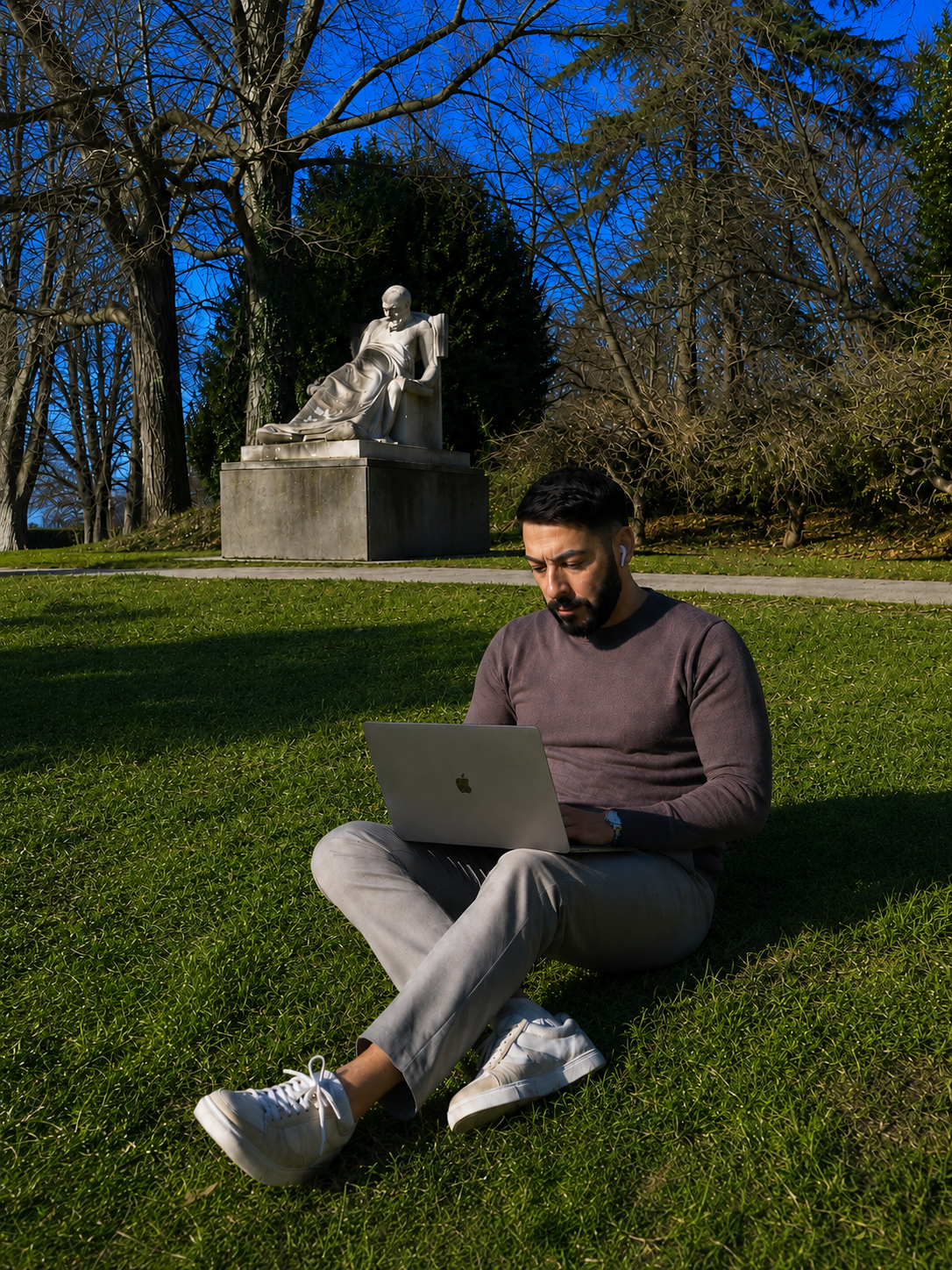
My wife is not a sounding board for every Niyam decision. She knows what we are doing, she cares about it, and she has been there through the worst parts, but I do not bring every problem home. That would not be fair to her, and it would not actually help me. Same with friends. I have a few people I genuinely turn to for company stuff. Agrim, of course, and a small group of founders and investors I trust. Outside of that, I try to let other parts of life stay other parts of life.
So I would say my mind is intertwined, but my relationships are not. That is the line I try to hold.
Outside of business and technology, what keeps you grounded and connected to yourself?
Coffee, the gym, reading, sports, my marriage, and the friends I have built around this life.
That probably sounds basic. It is.
The coffee thing might sound silly to people who do not get it, but I love the process. I have a Hario Switch and a hand grinder I have spent way too much time dialing in. There is something about making one good cup, by yourself, before the day starts, that resets me. It is one part of the morning that is not about anyone else.
The gym is similar. I train multiple times a week. It is one of the only places where the goal is simple and the feedback is honest. You either lifted the weight or you did not.
I read too. Not in some perfectly optimized founder routine way. I just like reading. It gives my brain somewhere else to go.
Same with sports. Watching sports, listening to sports, following teams and games, it has always been part of my life. It is simple, but I think simple things matter more when the rest of your life is chaotic.
Most of my close friends are founders too. We end up talking about company stuff a lot, but it grounds me in a way that generic “balance advice” never has. When I am struggling, I do not have to translate the situation. They get the life.
And my marriage. Presha is the person I am still trying to deserve. That is probably the most honest thing I can say.
During moments of uncertainty or exhaustion, what reminds you why you started this journey in the first place?
Honestly, it is usually a small moment with a customer or a teammate. Not some big philosophical thing.
One of our customers told us recently that Niyam caught something that would have made it into a production build. Not the kind of thing that ends up in a press release, but the kind of thing that confirms why the product exists. Stuff like that lands harder than any pitch I have ever given. That is the stuff we screenshot and frame for our office. That keeps us going for another six months. We tend to live on crumbs.
The other thing that reminds me is the team. Watching Agrim build is something I genuinely enjoy. He does work I could not do, and he does it cleanly. When you are tired and the company feels heavy, watching someone you trust ship something good is a quiet kind of fuel.
When I am really exhausted, I usually think about the version of me at 16 who started entrepreneurship under pressure, not because it was glamorous, but because the family needed it. That kid did not get to quit.
So neither do I.
That sounds dramatic on paper. In real life, it is just a thing I remember when I want to give up and need to not.
FEMIGRANTS ANNUAL FORUM AND THE PITCH COMPETITION
You recently won the Pitch Competition at the Femigrants Annual Forum. What was going through your mind the moment your name was announced?
Honestly, I was not even in the room when they called my name.
I was outside, deep in conversation with someone who had worked at Flex for 14 years. He is now coming on as an angel investor. When I tell you he understood the pain point inside the first two minutes of the conversation, I mean it. He had lived it. He had seen exactly the kind of mess we are trying to clean up, from the inside, at one of the biggest contract manufacturers in the world.
So when my name got called, I missed the actual moment. I was networking. I was excited that someone with that depth of operational experience was in the room and was interested in what we are building. That mattered more to me than the win, honestly. A trophy is a trophy. A 14 year Flex veteran who gets it on the first conversation is rare.
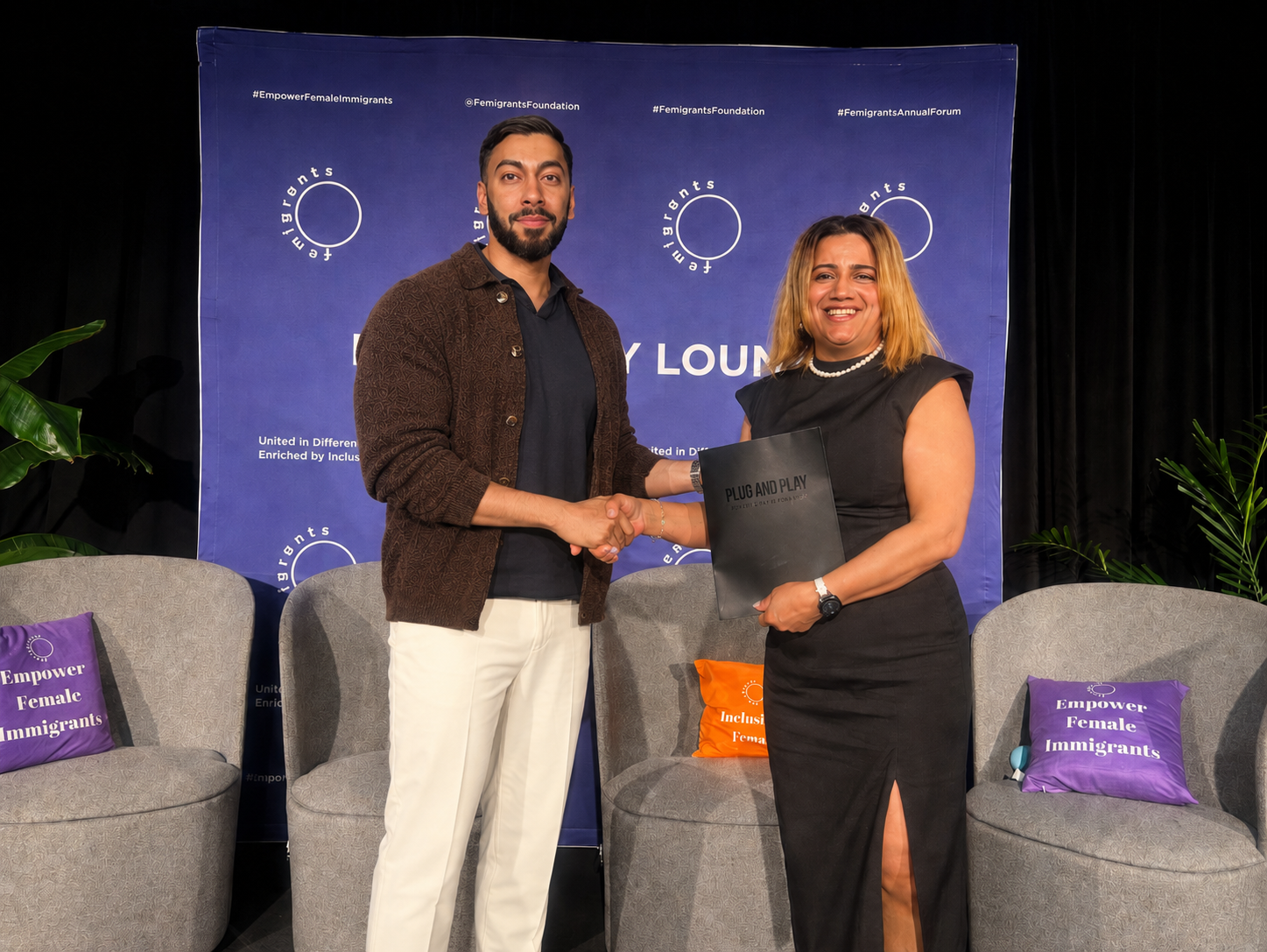
When I finally walked back in and realized what had happened, my first thought was that I wished Agrim had been there to hear it. We have built every part of this company together. He is the technical mind behind everything Niyam actually does, and I am usually the one in the room pitching.
So when we win something, it always feels a little incomplete if he is not there.
The wins are his as much as mine.
The forum brought together founders, innovators, and global industry leaders from different backgrounds and experiences. What did that recognition mean to you personally?
It meant a lot. More than I expected.
For most of my career, I have been the person standing slightly outside the room. I started entrepreneurship at 16 from a place most people in the Valley have never heard of. I built my first company in a market many American investors do not pay attention to. I am an immigrant. I was not on anyone’s list of expected founders.
So when a forum like Femigrants recognizes you, it is not just about the company. It is about the fact that the path you took, which did not look like the standard path, is being seen as legitimate. That matters to me. It matters for the version of me that grew up watching my dad build under pressure, and it matters for younger founders coming up now from places that get overlooked. It also reminded me that I am not building Niyam alone. Agrim is in this with me. Our early
customers chose us. Our investors believed early. Awards always feel personal in the moment, but the truth is that none of it happens without the people who decided to show up.
I left that night more motivated, not because of the trophy, but because the room was full of people who reminded me why I am doing this in the first place.
Looking ahead, where do you see yourself and Niyam AI 10 years from now, and what kind of impact do you hope to leave behind?
In 10 years, I hope Niyam is the layer that decides what is true inside hardware companies.
That sounds abstract, so let me say it the way I actually think about it. Every physical product around you, the laptop you are reading this on, the car you drive, the headphones in your ears, was built on top of component data. If that data is wrong, the product is wrong. Today, that data is mostly trusted on faith. We want to be the system that earns the trust, not assumes it.
If we get that right, the impact is not always visible. People will not see Niyam. They will just live in a world where products are safer, recalls are rarer, and the manufacturing supply chain is more honest with itself. That is a quiet kind of impact, and I am okay with that. The most important infrastructure is usually invisible.
For me personally, in 10 years I hope I am still building, but I hope I am also someone who has helped other people build. I had people who took bets on me when I was young and unproven. I want to be that person for the next set of founders, especially the ones coming from places people overlook. I am already starting to angel invest. Maybe I will become an LP in a fund or start my own.
Still making my own coffee in the morning. Still training. Still married. Still slightly unhireable.
That last part is not negotiable.