VALERIA VINOGRADOVA: THE SOCIOLOGY OF DESIRE
Valeria Vinogradova moved from Eastern European industrial marketing to Silicon Valley luxury events with one core belief: emotion drives decisions. Through her San Francisco ventures — Aesthetic Embassy, an event agency, and Slavine, a platform for Eastern European designers — she’s proving that whether you’re closing million-dollar contracts or planning weddings, logic alone never seals the deal.
You have an unusual origin story: sociology degree, five years heading marketing for an industrial B2B company, then luxury events in San Francisco. How does that trajectory make sense?
When I was living in Moscow, I headed marketing at SD Group, selling lighting systems to some of the country’s largest corporations — PIK Group, X5 Retail Group, Novikov Restaurant Group. Everyone assumed these were purely rational decisions: specifications, pricing, logistics. My results suggested otherwise. I increased B2B lead flow by 150% over three years by repositioning our product around experience: how lighting affects retail conversion, how it creates residential comfort, how it transforms restaurant atmosphere.
The realization crystallized: even in industrial sectors, relationship and experience drive decisions. The same psychology that drove corporate purchasing decisions — emotional resonance over pure logic — would become the foundation of my events methodology.
When I moved to San Francisco, I saw the same pattern everywhere, except no one was applying it to events. The industry was trapped between two extremes: logistics or decoration. No one was asking the deeper question: what is this event supposed to mean?
You founded two businesses — Aesthetic Embassy and Slavine. How do they connect?
They’re parts of one ecosystem, really. When I was moving to San Francisco, I kept thinking about leaving behind the beautiful emerging brands I’d watched develop across Eastern Europe — designers who were creating something sophisticated, culturally rich, distinct from Western aesthetics.
Slavine started as a way to bring those designers here. Initially, I considered consulting them on entering the American market, but I realized what was needed was distribution — a curated platform that could translate Eastern European design sensibility for U.S. audiences while maintaining its authenticity.
Aesthetic Embassy emerged from a parallel observation: San Francisco has extraordinary cultural infrastructure but very few venues where you’d actually want to wear those beautiful clothes. Why bring exceptional fashion if there’s nowhere to experience it? That’s when the
immersive events concept crystallized — creating spaces where aesthetic sophistication in all its forms could be appreciated.
They feed each other. Slavine gives us access to design resources and aesthetic perspectives that aren’t available in standard event vendor networks. Aesthetic Embassy creates the contexts where that level of design makes sense. It’s about building complete cultural experiences, not just offering isolated services.
So what is “emotional architecture” in practice?
It’s treating events as experiential narratives with designed emotional arcs. We start with what I call sociological interviewing — the deep discovery process sociologists use to understand motivations and meaning-making patterns — before any aesthetic decisions.
For a wedding, we ask: How did you meet? What was the moment you knew? What’s the feeling you want guests to leave with? Then we translate those answers into space, rhythm, sensory details. Maybe their first date was at a jazz club — so we don’t just book a jazz band, we design the entire evening’s pacing around improvisation and spontaneity. Maybe they value intellectual connection — so instead of standard toasts, we create a moment where guests share written reflections.
For corporate clients, we work backward from business metrics. If a tech company is losing talent to competitors, we don’t just throw a “fun” offsite. We interview leadership about company culture, then design an experience that reinforces what makes them distinctive. We build in moments that create sense of belonging — inside jokes become design elements, company history becomes theatrical staging. Then we validate the impact through concrete metrics: retention rates six months post-event, employee satisfaction scores, referral hiring.
Why San Francisco specifically? You’re competing against established players in New York and LA.
I’m not competing — I’m filling a gap they can’t see. San Francisco has this paradox: extraordinary cultural infrastructure — Napa, Monterey, historic venues, the most sophisticated audience in the country — but very few events with conceptual depth. Everything is either tech casual or generic luxury template.
The Bay Area elite have achieved everything materially. They’re not impressed by expensive anymore. They’re searching for meaning, for experiences that reflect who they actually are. And they’re willing to pay premium for that — but only if it’s authentic.
You’ve said “beautiful is forgettable,” yet you work in a visually driven industry. How do you reconcile that?
Aesthetics matter enormously — but only when they’re in service of meaning. There’s a discipline to visual storytelling. In sociology, we study how symbols communicate. A color isn’t just pretty; it carries cultural weight. A spatial arrangement isn’t just functional; it shapes how people interact.
I want to challenge the stereotype that “luxury events” means maximalist decoration. Real sophistication is restraint with intention. Every element should answer the question: what is this communicating?
This is where Slavine becomes particularly valuable. Eastern European design traditions have this quality — they understand that clothing is a language of self-expression, not just trend-following. Sociology of fashion — an academic discipline focused on people and meaning, not just surface trends — captures this perfectly. That depth translates directly to how we approach events.
Our clients don’t hire us for Instagram moments. Our referral rate is 85% — well above the industry average of 30-40% — because people remember what we create 18 months later, not just when the photos arrive. They remember because the experience meant something personal.
Your own wedding experience shaped this business. What happened?
Our venue budget grew 20% between initial quote and final billing — hidden alcohol markups, undisclosed service fees, mysterious charges that appeared nowhere in the contract. I realized the wedding industry is structurally designed for extraction, not value. Most planners work on vendor commission, which incentivizes inflating budgets.
But the bigger issue was conceptual emptiness. Every planner showed me mood boards — beautiful staging, standard timeline, generic flow. No one asked: Who are you as a couple? What do you want this day to mean? They were selling a service, not creating a narrative.
That’s when it became clear what I wanted to build. My B2B marketing background taught me to manage complex budgets and negotiate with vendors. My sociology training gave me the tools to extract personal meaning through interviewing. Combining those — that’s the methodology.
I founded Aesthetic Embassy about a year after our wedding, once I’d fully processed what the market was missing and developed the framework to address it.
The luxury market is shifting. What are you seeing?
I recently spoke with a luxury consulting club in New York, and the theme dominating every conversation was authenticity as currency. When you’ve already earned everything, proven everything to yourself and the world, you can finally afford to be yourself.
People aren’t buying Porsches to impress neighbors anymore — they’re buying them because they dreamed about that car since childhood. It’s internal validation, not external performance. The same shift is happening in events.
Clients come to us specifically because they don’t want what everyone else has. They want something that reflects their actual values, their real story — even if that’s quieter, smaller, less “impressive” by traditional metrics.
What’s next for Aesthetic Embassy and Slavine?
Geographic expansion is the immediate focus — New York next season, then LA. European destination weddings in castle venues. Both businesses scale together: as we create more sophisticated events, we need access to design resources that can match that vision. As Slavine grows its designer network, we’re creating the cultural contexts where that level of craft can be fully appreciated.
We work with San Francisco’s most distinctive historic venues — spaces like the 1908 Bank of Italy building at Amador Club that have architectural character and cultural resonance. These spaces become collaborators in the storytelling, not just backdrops.
But the deeper goal is methodology scaling. At SD Group, I built CRM infrastructure that let us serve major corporate clients simultaneously while maintaining personalization. I’m applying that same systematic thinking here: creating frameworks that allow the approach to scale without diluting quality.
The vision isn’t simply bigger companies — it’s establishing a new category. Right now, “event planner” means logistics coordinator or decorator. I want “experiential architect” to be recognized as its own discipline, combining sociology, scenography, business strategy, and narrative design.
If you could change one thing about the events industry, what would it be?
Transparency. The hidden costs, the commission structures, the lack of clear value proposition — it creates distrust. Clients should know exactly what they’re paying for and why.
But more fundamentally: shifting from template thinking to narrative thinking. Every event should start with the question why are we gathering? — not what it should look like? When you answer the why first, the what becomes obvious.
What’s the core philosophy behind everything you build?
We don’t organize events. We design the architecture of experience. Emotion is the medium, aesthetics is the language, meaning is the strategy. In a world oversaturated with information and transaction, the ultimate luxury is an experience that helps you understand yourself more clearly — and connects you more deeply to the people who matter.
About
VISION & CONCEPT
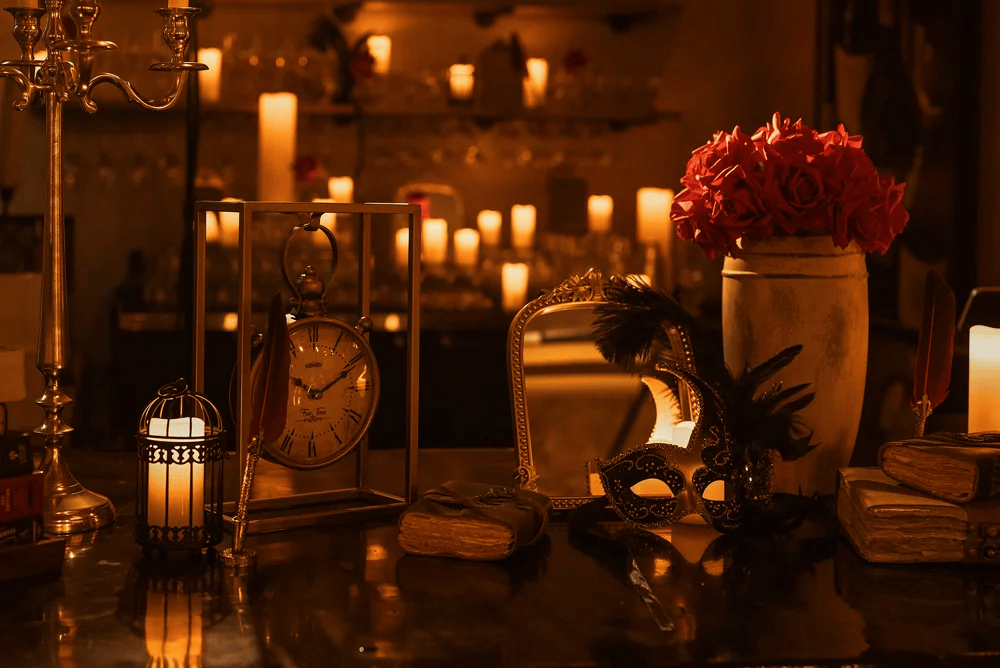
Every element provokes a specific feeling: power, temptation, catharsis, gratitude. Nothing is random; everything serves the architecture of emotion: transitions, contrasts, tension and release. We work with perception, not narrative. The guest lives the story without playing a role.
IMMERSION INWARD
Guests participate without pressure, without absurdity. We create immersion inward—where you don’t lose yourself, you find yourself. An experience lived through, with elegance and dignity intact. The space breathes with you, inviting you in only as far as feels right.
AESTHETIC & CODE
High aesthetic standard in everything: movement, light, scent, sound, taste. Costumes, gestures, details—nothing accidental. Every touch speaks a unified language. Elegance, clarity, measure.
www.aestheticembassy.com